Key Takeaways

  • Every MCQ book here is a supplement, not a standalone resource.
  • Match the book to your exam's scope and your need for explanations.

How to Choose an MCQ Review Book for Your Specialty Exam

Choosing the right MCQ book for specialty exams can be overwhelming. With many options, you need to know which book aligns with your curriculum, teaches effectively, and prepares you for the exam format. This data-driven comparison of three top picks will help you decide.
MCQs in Medical Microbiology and Infectious Diseases

Best for Quick ID Revision: Portable MCQ Bank

★ 3.2/5
F. X. S. Emmanuel, P. W. Ross

Who This Is For

Surgical and medical trainees (MRCP, FRCS/MRCS, MRCOG, MRCGP) needing a fast microbiology refresher before exams.

Why It Stands Out

Compact and portable, with extended answers that link clinical scenarios to microbiology principles. Its 120 questions are ideal for last-minute self-quizzing, and the extended answers provide step-by-step reasoning that helps you connect symptoms to diagnoses.

Only 120 questions, so it cannot cover the full curriculum or provide enough practice volume. Its learning effectiveness score of 3.0 suggests explanations may be less detailed than other options—not ideal if you need to understand concepts from scratch. Practical application is also 3.0, meaning the questions may not fully mimic the clinical vignettes you'll see on the exam.

Expert Angles

Learning Effectiveness

3.0/5

Extended explanations promote active learning by connecting clinical presentation to microbiology principles.

Good for spaced repetition when combined with larger question banks; avoid relying on it as sole resource.

Curriculum Alignment

3.0/5

Explicitly aligned with FRCS/MRCS, MRCP, MRCOG, MRCGP syllabi and undergraduate microbiology learning outcomes.

A starter question bank for surgical trainees beginning their exam preparation to identify weak areas.

Practical Application

3.0/5

Compact format allows for rapid, repeated self-quizzing during commutes or between clinical duties.

Ideal for MRCS/MRCOG candidates needing a portable, last-minute confidence check on key bugs and drugs.

MCQs in Physical Medicine and Rehabilitation

Best for Rehab Breadth: Broad Topic Coverage

★ 3.0/5
Jimi Jose, S. Sunder

Who This Is For

Trainees in rehab medicine, orthopedics, or neurology preparing for postgraduate exams with a wide syllabus.

Why It Stands Out

Covers 31 chapters across the rehab spectrum, from ADLs to prosthetics, with updated facts for quick recall checks. Its curriculum alignment score of 4.0 indicates strong coverage of the rehab medicine syllabus, making it a solid choice for breadth.

No answer explanations, so you cannot learn from your mistakes without another resource. Its learning effectiveness (3.0) and practical application (3.0) scores suggest it may not be the best for deep understanding or direct exam application, as the questions may not reflect the clinical reasoning required on the test.

Expert Angles

Curriculum Alignment

4.0/5

Comprehensive mapping to rehabilitation topics: general principles, therapeutics, special populations, and medical conditions.

Excellent for trainees needing a broad curriculum-aligned review tool across multiple surgical disciplines.

Practical Application

3.0/5

Covers practical domains: ADLs, orthotics, prosthetics, mobility aids, and therapeutic exercises.

Helpful for therapists and surgeons reviewing practical rehabilitation interventions before exams.

Pedagogical Value

3.0/5

Revised MCQs offer broad topic coverage for self-assessment; structured by rehab principles and conditions, reinforcing core knowledge.

Ideal for trainees in orthopedics, neurology, and rehab medicine seeking rapid recall checks before exams.

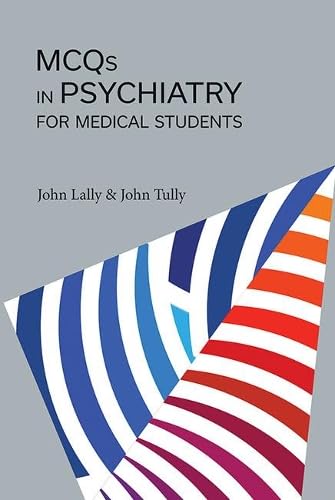
MCQs in Psychiatry for Medical Students

Best for Psychiatry Depth: Explanations That Teach

★ 4.2/5
John Lally

Who This Is For

Medical students and trainees in psychiatry who want exam prep with substantive explanations and current references.

Why It Stands Out

The psychiatry book received top scores for practical application (5.0) and strong scores for learning effectiveness (4.0), suggesting it excels in applying knowledge to exam scenarios and building real understanding. The explanations are detailed, with step-by-step reasoning that mimics clinical vignettes, and the references are current, making it ideal for deep learning.

Some extended matching items lack explanations, missing a learning opportunity for those questions. Additionally, it is targeted at medical students, so advanced trainees may find it less challenging.

Expert Angles

Practical Application

5.0/5

Self-test format mirrors real exam styles across multiple countries; highly user-friendly revision tool.

Essential resource for last-minute exam preparation and high-yield revision sessions.

Learning Effectiveness

4.0/5

Illuminating, non-turgid explanations make self-testing engaging and may even spark interest in psychiatry.

Excellent for active recall and building interest in psychiatry among medical students.

Knowledge Depth

4.0/5

Explanations provide more detail than strictly necessary, fostering genuine understanding over rote learning.

Appropriate for students who want exam prep with substantive conceptual reinforcement.

Curriculum Alignment

4.0/5

Questions match the format of modern medical curriculum exams in the UK, Ireland, Australia, and NZ.

Tailored for undergraduates in outcomes-based curricula facing psychiatry written exams.

Breadth vs. Depth: Which MCQ Book Fits Your Exam?

These three books serve different exam scopes and learning needs. The table below summarizes their scores across key dimensions to help you decide.

Infectious Disease MCQ

Quick, portable, but thin on volume.

Rehab Medicine MCQ

Broad coverage but no explanations.

Psychiatry MCQ

Deep explanations and strong learning value.

Comparison Point MCQs in Medical Microbiology and Infectious Diseases MCQs in Physical Medicine and Rehabilitation MCQs in Psychiatry for Medical Students
Edition 1 2 1
Page Count 132 pages 158 pages 216 pages
Best for Quick ID revision before surgical exams Broad rehab topic coverage Understanding psychiatry concepts
Main trade-off Too few questions for full prep No explanations for errors Some items lack explanations
Ideal user MRCS/MRCOG candidates Rehab medicine trainees Medical students and psychiatry trainees
Curriculum Alignment Score 3.0 4.0 4.0
Learning Effectiveness Score 3.0 3.0 4.0
Practical Application Score 3.0 3.0 5.0
Curriculum Alignment
3.0/5
Explicitly aligned with FRCS/MRCS, MRCP, MRCOG, MRCGP syllabi and undergraduate microbiology learning outcomes.
A starter question bank for surgical trainees beginning their exam preparation to identify weak …
4.0/5
Comprehensive mapping to rehabilitation topics: general principles, therapeutics, special populations, and medical conditions.
Excellent for trainees needing a broad curriculum-aligned review tool across multiple surgical disciplines.
4.0/5
Questions match the format of modern medical curriculum exams in the UK, Ireland, Australia, and NZ.
Tailored for undergraduates in outcomes-based curricula facing psychiatry written exams.
Learning Effectiveness
3.0/5
Extended explanations promote active learning by connecting clinical presentation to microbiology principles.
Good for spaced repetition when combined with larger question banks; avoid relying on it …
3.0/5
Active recall format supports spaced repetition and quick self-assessment for busy clinicians.
Best as adjunctive test prep for postgraduate surgical or rehab medicine examinations.
4.0/5
Illuminating, non-turgid explanations make self-testing engaging and may even spark interest in psychiatry.
Excellent for active recall and building interest in psychiatry among medical students.
Knowledge Depth
2.0/5
Extended answers provide more context than simple MCQs, offering some explanatory depth per question.
Use as a shallow dipstick test; supplement immediately with comprehensive textbooks for true understanding.
2.0/5
Revised MCQs ensure updated facts across 31 chapters, covering the rehabilitation spectrum efficiently.
Use as a supplement for surface-level knowledge checks, not as a primary learning resource.
4.0/5
Explanations provide more detail than strictly necessary, fostering genuine understanding over rote learning.
Appropriate for students who want exam prep with substantive conceptual reinforcement.
If you need explanations to learn, pick the psychiatry book. If you need curriculum alignment and breadth, pick the rehab book. If you need portability, pick the ID book.

How We Evaluated These Resources

We scored each book on curriculum alignment, learning effectiveness, and practical application. We also weighed how well each book converts study time into exam readiness. The scores are based on a standardized rubric that assesses the depth of explanations, the realism of questions, and the coverage of the official syllabus.

Building Your Resource Collection

Use these MCQ books as supplements, not sole resources. Pair them with a textbook or question bank for depth. Rotate them for spaced repetition. For example, if you choose the rehab book for its breadth, supplement it with a resource that provides detailed explanations to fill the gap.

Final Verdict

The psychiatry MCQ book offers the best learning value, with top practical application (5.0) and strong learning effectiveness (4.0). The rehab book has strong curriculum alignment (4.0) but lower learning effectiveness and practical application (both 3.0) due to a lack of explanations. The ID book is a quick, portable option but with limited questions and lower learning effectiveness. Choose based on your exam's scope and your need for explanations.

Compare your top two by question count, explanation quality, and portability before you buy.