How to Choose a Surgical Exam Prep Book
Surgical exams test recall, clinical reasoning, and operative knowledge. These three books approach that differently. Here is how to pick the right one for your stage.
We compare Cases for Surgical Finals, Oxford Handbook of Operative Surgery, and Pocket Surgery on effectiveness, curriculum alignment, and practicality to help
Surgical exams test recall, clinical reasoning, and operative knowledge. These three books approach that differently. Here is how to pick the right one for your stage.
Medical students preparing for surgical finals or MRCS Part A who need broad question practice.
Provides a broad range of questions across multiple specialties in multiple formats (SAQs, EMQs, MCQs). Detailed explanations for each answer clarify common pitfalls and support active recall and exam simulation.
User-friendly with short questions, multiple formats, and explanatory answers to reinforce learning.
Effective for active recall and exam simulation; combine with current texts.
Comprehensive alignment with undergraduate surgical finals and MRCS syllabi across multiple specialties.
Best used alongside updated resources to ensure curriculum currency.
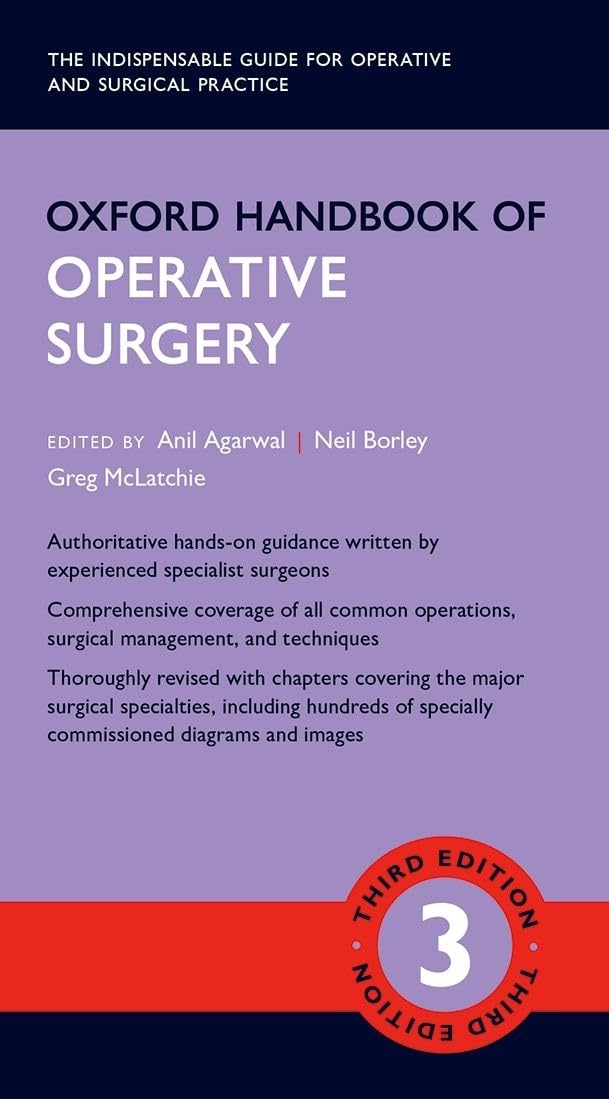
Core surgical trainees and residents who need a portable, practical guide for the operating room.
Over 300 diagrams and step-by-step instructions with numbered diagrams for common procedures like appendectomy, plus tips from experienced surgeons. Its concise format is designed for quick consultation in the OR.
Portable, pocket-sized format with 300+ diagrams; step-by-step equipment and technique guidance for the OR.
Perfect for scrubbed trainees who need immediate, actionable procedural steps.
Explicitly mapped to the intercollegiate surgical curriculum across 10 specialties; updated to reflect modern training.
Essential for core surgical trainees aligning study with curriculum-defined operations.
Medical students on surgical clerkship and junior residents who need quick access to protocols and management algorithms.
Full-color, loose-leaf format fits in a white coat. Includes medication tables, algorithms, and ACS/ASE simulation curricula. Its organized tabs and index allow faster look-up than a web search on the go.
Designed as a vade mecum with medication tables, management algorithms, and rapid navigation, making it faster than web search.
Ideal for on-call residents who demand immediate, fingertip access to surgical protocols and drug doses.
Loose-leaf, pocket-sized format fits into a white coat, with digital access and audiobook conversion for on-the-go review.
Perfect for surgical trainees who need durable, instant-access pocket reference during rounds and call.
These books serve different purposes. Here is how they stack up on key criteria.
Best for exam practice and recall testing.
Best for intraoperative guidance and procedural knowledge.
| Comparison Point | Cases for Surgical Finals | Oxford Handbook of Operative Surgery | Pocket Surgery |
|---|---|---|---|
| Edition | 1 | 3 | 3 |
| Page Count | 164 pages | 1022 pages | 715 pages |
| Primary strength | Active recall via questions | Step-by-step operative detail | Fast access to protocols |
| Main weakness | No clinical depth | Not for quick reference | Lacks deep explanations |
| Best for | Finals and MRCS Part A | OR prep and rotations | Clerkship and on-call |
| Learning effectiveness | 4.0 | 4.0 | 3.8 |
| Curriculum alignment | 4.0 | 4.0 | 4.2 |
| Practical application | 3.5 | 4.8 | 4.5 |
| Reference quality | 3.0 | 4.2 | 4.7 |
| Learning Effectiveness |
4.0/5
User-friendly with short questions, multiple formats, and explanatory answers to reinforce learning.
Effective for active recall and exam simulation; combine with current texts.
|
4.0/5
Pre- and post-operative reading aid; tips and tricks from experienced surgeons accelerate skill acquisition.
Good for early-year trainees rotating through specialties who need rapid, case-specific learning.
|
4.0/5
Full-color visuals, flowcharts, and bullet-point layout reinforce rapid recall and cater to visual and auditory learners via text-to-speech.
Excellent for quick memorization before exams and high-turnover clinical rotations.
|
| Practical Application |
1.0/5
None; no operative or hands-on content.
Avoid for practical surgical training; only for written exam preparation.
|
5.0/5
Portable, pocket-sized format with 300+ diagrams; step-by-step equipment and technique guidance for the OR.
Perfect for scrubbed trainees who need immediate, actionable procedural steps.
|
5.0/5
Loose-leaf, pocket-sized format fits into a white coat, with digital access and audiobook conversion for on-the-go review.
Perfect for surgical trainees who need durable, instant-access pocket reference during rounds and call.
|
| Reference Quality |
2.0/5
Can serve as a quick question reference for exam topics across surgical specialties.
Short-term exam prep tool; not a lasting reference for clinical practice.
|
4.0/5
Compact, quick-access handbook covering a wide variety of operations, ideal for last-minute review.
Valuable quick-reference for surgical residents and assistants in emergency or acute settings.
|
5.0/5
Designed as a vade mecum with medication tables, management algorithms, and rapid navigation, making it faster than web search.
Ideal for on-call residents who demand immediate, fingertip access to surgical protocols and drug …
|
We scored each book on learning effectiveness, curriculum alignment, practical application, and reference quality. We weighed exam relevance and real-world usability over marketing claims. We also considered feedback from trainees and practicing surgeons.
Start with one primary book that matches your exam stage. Add a second only if it fills a specific gap. For finals, a question bank plus a pocket reference works well. For core training, an operative guide plus a reference is stronger. Avoid buying three books that all do the same thing.
Pick the book that targets your weakest area. If you need recall practice, go with Cases for Surgical Finals. If you need OR guidance, choose the Oxford Handbook. For quick clinical answers, Pocket Surgery is the best value. Buy one, use it, and add others only when needed. Consider the trade-offs: breadth vs. depth, portability vs. comprehensiveness, and exam focus vs. clinical utility.