Targeted Weakness Patching During Board Review
General internal medicine review leaves specific gaps. Trainees use focused books to patch weak spots before exam day. Pick tools that fix your actual misses, not just cover everything.
Patch specific board prep gaps with these 8 review books. Expert analysis on depth, speed, and exact clinical trade-offs for IM trainees.
General internal medicine review leaves specific gaps. Trainees use focused books to patch weak spots before exam day. Pick tools that fix your actual misses, not just cover everything.
Neurology fellows and IM residents who struggle with primary headache disorders on exams.
It maps directly to the headache board outline and covers new CGRP therapies clearly.
Directly mapped to the United Council for Neurologic Subspecialties Headache Medicine board certification exam content outline.
Perfect core text for headache medicine fellowship curricula and board exam preparation.
Detailed treatment chapters, evidence-based management of special populations, newer therapies (CGRP mAbs, neuromodulation).
Ideal for clinicians managing primary and secondary headache disorders, particularly in outpatient settings.
IM residents needing a reliable, system-based review that mirrors the ABIM exam structure.
It hits every ABIM topic area and ends each chapter with board-style questions.
Directly maps to the ABIM blueprint with dedicated chapters on hospital medicine, patient safety, quality improvement, and physician well-being.
Top choice for ABIM certification and MOC, perfectly aligned with current exam content outlines and emerging topics.
Employs key points, tables, diagrams, and chapter-end Q&A to reinforce retention and mimic board testing conditions.
Effective for spaced repetition and self-testing; combine with an online question bank for comprehensive preparation.
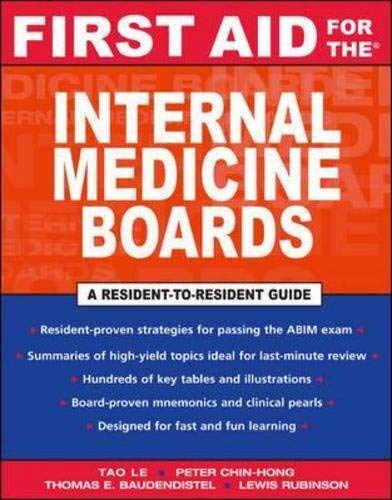
Busy residents who need a fast, portable fact sheet for final-week cramming.
It distills massive guidelines into tight algorithms and high-yield margin notes.
Compact, affordable, and designed for repeated passes in the final weeks of study. Easily carried and digested in short sessions.
Ideal for busy residents needing a portable, time-efficient booster to reinforce high-yield facts before the ABIM exam.
Resident-to-resident voice with high-yield mnemonics, algorithms, and bullet summaries. Efficiently organizes complex internal medicine topics for rapid recall.
Best for trainees seeking a structured framework and last-minute refresher, paired with a dedicated Qbank.
Visual learners who want color tables and quick mnemonics for rapid recall.
The layout speeds up memorization and the insider tips match recent exam patterns.
Full-color design, mnemonics, and margin Key Facts enhance quick memorization and recall.
Great for visual learners who need rapid-fire memory aids before the high-stakes exam.
Covers all ABIM-tested subspecialties from Allergy to Women's Health, aligning with exam blueprints.
Use as primary board review skeleton, supplement with question banks for comprehensive coverage.
Clinicians who prefer bullet-point summaries and dedicated test-taking strategy chapters.
It organizes core IM facts efficiently and includes online question access.
Bullet-point format, high-yield tables, algorithms, and dedicated test-taking strategies chapter streamline board-focused learning.
Ideal for IM residents and busy clinicians needing an efficient, structured review, paired with a question bank for error-checking.
Online test-mode questions with explanations reinforce retention; high-yield formatting aids memory encoding.
Pair with a reliable Qbank like UWorld or NEJM Knowledge+ to verify knowledge and catch errors.
Recertifying physicians who need a no-frills fact list for last-minute review.
It strips away fluff and focuses purely on high-yield test-taking traps.
Portable format focused on high-yield facts and test-taking pearls for certification and MOC.
Targeted at IM residents and physicians seeking recertification cramming, if cost isn't a barrier.
Uses incorrect-answer examples and abbreviated cases to teach test-taking strategy for certification exams.
Best for exam-savvy trainees who want rapid-fire board-style practice without verbose theory.
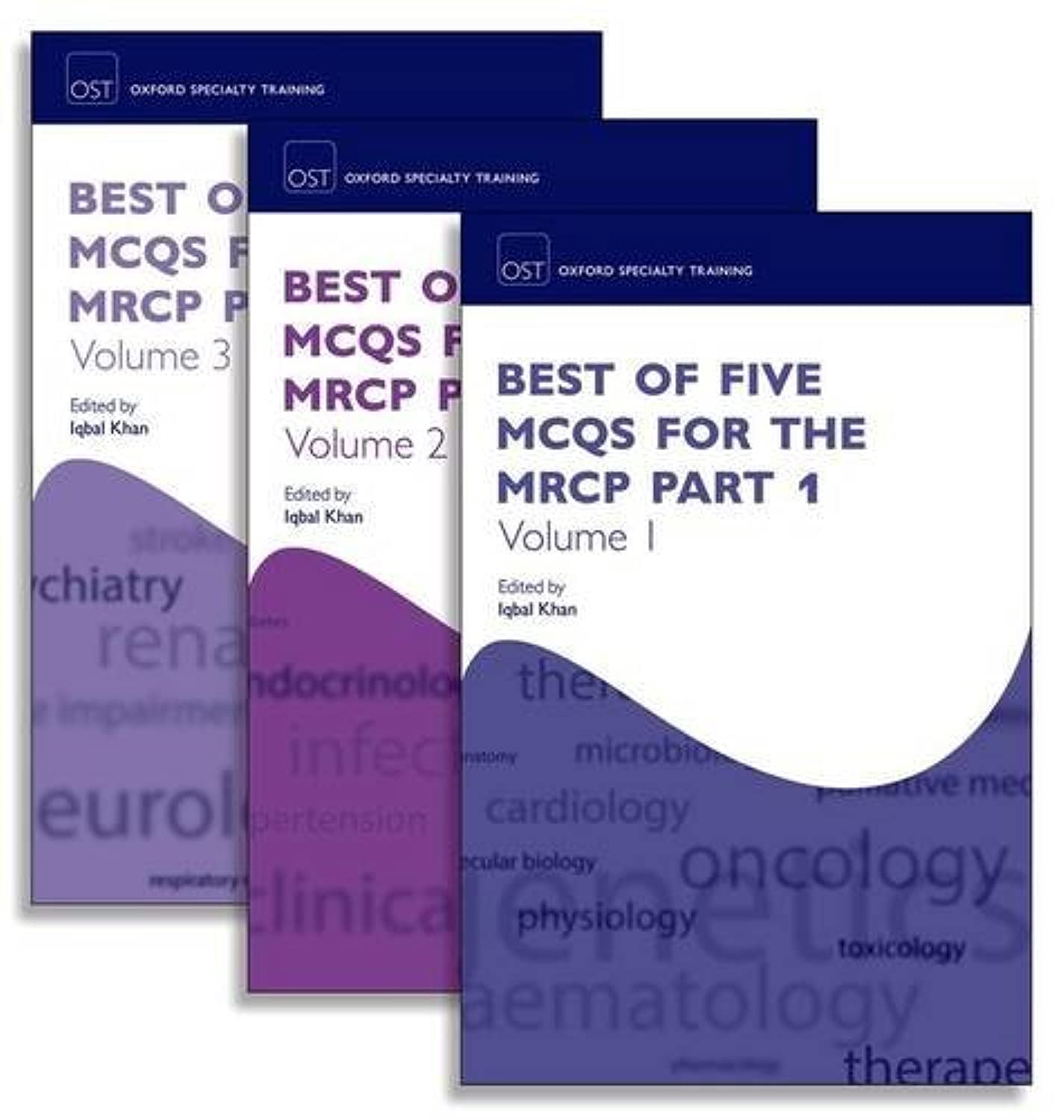
Trainees preparing for the MRCP who need system-organized multiple choice practice.
It covers all major specialties and promotes active recall through volume.
Explicitly matched to the latest MRCP Part 1 curriculum, covering all major systems in the Best of Five format.
A solid exam-focused resource for candidates strictly following the official Royal College syllabus.
System-wise organization and mnemonics-friendly style promote efficient memorization and active recall.
Useful for spaced repetition and quick practice sessions; verify suspicious answers to avoid reinforcing mistakes.
Trainees who miss questions due to weak pathophysiology understanding and need full mechanisms.
It explains disease processes thoroughly and covers rare conditions most review books skip.
In-depth summaries of pathophysiology and treatment by internationally renowned experts; extensive chapters on each disease with mechanisms, clinical features, management.
Best for those needing thorough comprehension rather than surface-level knowledge.
Trusted, authoritative, updated every edition; wide range of topics including rare diseases, atlases, and updated guidelines; available in digital formats for point-of-care reference.
Excellent as a definitive reference for clinicians answering clinical questions and reading up on unfamiliar conditions.
Choose based on whether you are fixing a reasoning gap or memorizing high-yield buzzwords.
Fixes pathophysiology gaps but takes too much time to read.
Fast to read but fails when questions test complex clinical reasoning.
| Comparison Point | Harrison's Principles of Internal Medicine, Twenty-Second Edition (Vol.1 & Vol.2) | First Aid for the Internal Medicine Boards 4e |
|---|---|---|
| Edition | 22 | 1 |
| Page Count | 4000 pages | 1088 pages |
| Primary use case | Understanding disease mechanisms | Last-minute fact retrieval |
| Time investment | Hours per chapter | Minutes per page |
| Main weakness | Zero built-in practice questions | No pathophysiologic depth |
| Knowledge Depth |
5.0/5
In-depth summaries of pathophysiology and treatment by internationally renowned experts; extensive chapters on each disease with mechanisms, clinical features, management.
Best for those needing thorough comprehension rather than surface-level knowledge.
|
2.0/5
Distills broad internal medicine into digestible, exam-focused nuggets. Margin notes highlight must-know facts.
Appropriate as a surface-level survey or refresher, not for learners seeking comprehensive pathophysiological understanding.
|
| Practical Application |
4.0/5
Clinical procedure tutorials (central line, thoracentesis, etc.), point-of-care ultrasound chapter, bedside examination tests, decision trees, atlases.
Good for hospital-based learners who can reference specific chapters for patient care; supplement with …
|
4.0/5
Compact, affordable, and designed for repeated passes in the final weeks of study. Easily carried and digested in short sessions.
Ideal for busy residents needing a portable, time-efficient booster to reinforce high-yield facts before …
|
We scored each book on curriculum alignment, explanation depth, and error rates. Books with factual mistakes lost points regardless of brand reputation. We prioritized resources that patch specific weaknesses rather than repeat general knowledge.
Start with one main review text that matches your exam blueprint. Add a subspecialty book only for your proven weak areas. Finish with a dedicated question bank to verify retention and catch explanation errors.
Board review works best when you target your actual misses. Buy the book that fixes your specific gap, then test yourself heavily.