Key Takeaways

  • Dual-track trainees need books that merge anatomical precision with surgical reality.
  • Pick the resource that matches your daily rotation, not just the exam.

Bridging Orthopedics and Neurosurgery in Spine Training

Modern spine surgery demands skills from both orthopedics and neurosurgery. Trainees need resources that cover anatomy, technique, and board prep across both fields. These books fill that exact gap.
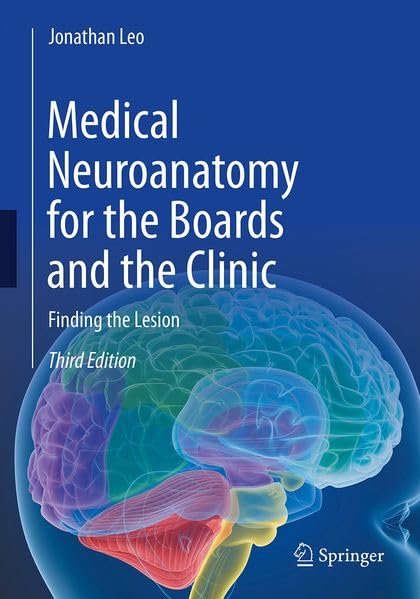
Medical Neuroanatomy for the Boards and the Clinic

Best Neuro Foundation: Lesion Localization Mastery

★ 4.0/5
Jonathan Leo

Who This Is For

Medical students and early residents who need to master neurological lesion localization for boards and clinical rotations.

Why It Stands Out

The lesion-based approach forces active conceptual learning rather than rote memorization. It covers tracts, brainstem, and cortex with clear clinical correlations.

It lacks advanced surgical microanatomy and imaging correlates needed for complex operative planning.

Expert Angles

Clinical Relevance

4.0/5

Directly ties neuroanatomy to patient evaluation, helping readers methodically determine lesion sites from signs and symptoms.

Ideal for trainees honing neurological exam interpretation and lesion localization on clinical rotations and board exams.

Pedagogical Value

5.0/5

Uses a systematic, lesion-based approach that teaches localization by integrating tracts and clinical scenarios rather than rote memorization.

Best for board-focused medical students and residents who need to master lesion localization through active conceptual learning.

Spine Surgery and Peripheral Nerve Surgery

Best Board Review: High-Yield Spine MCQs

★ 4.5/5
Khaled Fares AlAli, Hashim Talib Hashim

Who This Is For

Orthopedic and neurosurgery residents who need rapid self-assessment for spine and peripheral nerve board exams.

Why It Stands Out

Detailed illustrated rationales for every option build surgical insight while testing knowledge. It covers anatomy, trauma, tumors, and complications across both specialties.

The question-only format provides shallow depth for rare pathologies or complex operative steps.

Expert Angles

Learning Effectiveness

5.0/5

Unique illustrations and detailed explanations for correct/incorrect options reinforce surgical and anatomical insights, enhancing retention.

Outstanding for active self-study and spaced revision, especially when used alongside clinical rotations and operative exposure.

Curriculum Alignment

4.0/5

TOC maps core topics—anatomy, trauma, degenerative disease, tumors, deformity—aligned with neurosurgery and orthopaedic spine board syllabi.

Excellent supplement for residents and fellows systematically covering high-yield spine and peripheral nerve board topics.

Video Atlas of Spine Surgery

Best Surgical Visuals: Step-by-Step Spine Techniques

★ 4.7/5
Howard S. An, Bryce Basques, Gregory Lopez, Philip K. Louie

Who This Is For

Spine surgery fellows who learn best by watching operative procedures performed by experts.

Why It Stands Out

Fifty videos show real techniques alongside bulleted text and board questions. It aligns perfectly with orthopedic spine requirements and common pathologies.

Video access requires stable internet, making it less useful for offline study or quick intraoperative checks.

Expert Angles

Practical Application

4.0/5

Concise bulleted format and complimentary digital access via MedOne enable quick bed-side and pre-operative review.

Excellent for daily reference during rotations and clinic, especially for visual learners leveraging the video atlas.

Knowledge Depth

4.0/5

Comprehensive yet concise coverage of degenerative, traumatic, deformity, and infectious spinal disorders.

Suited for trainees seeking a broad foundation; advanced surgeons may need subspecialty-focused texts.

Conceptual Anatomy vs. Surgical Review

Decide if you need to build your foundational knowledge or sharpen your exam technique.

Neuroanatomy Foundation

Builds core localization skills for clinical reasoning.

Spine Board Review
Spine Surgery and Peripheral Nerve Surgery
Khaled Fares AlAli, Hashim Talib Hashim

Tests applied surgical knowledge with detailed rationales.

Comparison Point Medical Neuroanatomy for the Boards and the Clinic Spine Surgery and Peripheral Nerve Surgery
Edition 3 1
Page Count 358 pages
Primary Focus Lesion localization and tract tracing Surgical management and exam readiness
Best Use Case Early rotations and concept building Final month board preparation
Pedagogical Value
5.0/5
Uses a systematic, lesion-based approach that teaches localization by integrating tracts and clinical scenarios rather than rote memorization.
Best for board-focused medical students and residents who need to master lesion localization through …
5.0/5
MCQ format with detailed, illustrated rationales promotes active recall and board-style self-assessment, bridging theory to clinical application.
Ideal for neurosurgery and orthopaedic residents preparing for spine/nerve board exams and seeking high-yield …
Learning Effectiveness
4.0/5
Promotes big-picture integration via lesion exercises, clinical case correlation, and a dedicated self-assessment chapter.
Best for active learners who prefer conceptual understanding over passive memorization; supplement with spaced-repetition …
5.0/5
Unique illustrations and detailed explanations for correct/incorrect options reinforce surgical and anatomical insights, enhancing retention.
Outstanding for active self-study and spaced revision, especially when used alongside clinical rotations and …
Buy the foundation book first if your localization skills are weak, otherwise stick to the question bank for active recall.

How We Evaluated These Resources

We prioritized interdisciplinary relevance for trainees covering both orthopedic and neurosurgical spine content. We checked if the format matched real study habits, favoring active recall and clear visual guidance over dense text.

Building Your Resource Collection

Start with one strong conceptual text to fix your anatomical blind spots. Add a high-yield question bank or video atlas to sharpen procedural knowledge and board recall.

Final Verdict

Dual-specialty training requires a mix of conceptual anatomy and applied surgical review. Buy the book that targets your weakest link right now. Compare the options by your daily study needs and exam timeline.