As an Amazon Associate, we earn from qualifying purchases
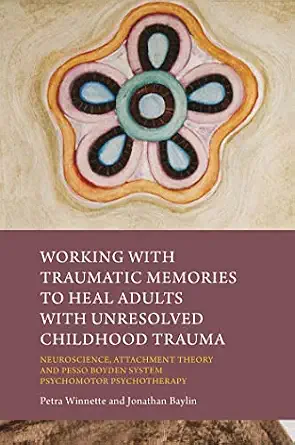
Working with Traumatic Memories to Heal Adults with Unresolved Childhood Trauma: Neuroscience, Attachment Theory and Pesso Boyden System Psychomotor Psychotherapy
What potential does psychotherapy have for mediating the impact of childhood developmental trauma on adult life? Combining knowledge from trauma-focused work, understandings of the developmental brain and the neurodynamics of psychotherapy, the authors explain how good care and poor care in childhood influence adulthood. They provide scientific background to deepen understanding of childhood developmental trauma. They introduce principles of therapeutic change and how and why mind-body and brain-based approaches are so effective in the treatment of developmental trauma. The book focuses in particular on Pesso Boyden System Psychotherapy (PBSP) which uniquely combines and integrates key processes of mind-body work that can facilitate positive change in adult survivors of childhood maltreatment. Through client stories Petra Winnette and Jonathan Baylin describe the clinical application of PBSP and the underlying neuropsychological concepts upon which it is based. Working with Traumatic Memories to Heal Adults with Unresolved Childhood Trauma has applications relevant to psychotherapists, psychologists and psychiatrists working with clients who have experienced trauma. Read more
About This Book
What potential does psychotherapy have for mediating the impact of childhood developmental trauma on adult life? Combining knowledge from trauma-focused work, understandings of the developmental brain and the neurodynamics of psychotherapy, the authors explain how good care and poor care in childhood influence adulthood. They provide scientific background to deepen understanding of childhood developmental trauma. They introduce principles of therapeutic change and how and why mind-body and brain-based approaches are so effective in the treatment of developmental trauma. The book focuses in particular on Pesso Boyden System Psychotherapy (PBSP) which uniquely combines and integrates key processes of mind-body work that can facilitate positive change in adult survivors of childhood maltreatment. Through client stories Petra Winnette and Jonathan Baylin describe the clinical application of PBSP and the underlying neuropsychological concepts upon which it is based. Working with Traumatic Memories to Heal Adults with Unresolved Childhood Trauma has applications relevant to psychotherapists, psychologists and psychiatrists working with clients who have experienced trauma. Read more
| ISBN-13 | 9781849057240 |
| ISBN-10 | 1849057249 |
| Publisher | Jessica Kingsley Publishers |
| Publication Date | October 2016 |
| Edition | 1 |
| Pages | 304 |
| Language | English |
| Dimensions | 5.98 x 0.69 x 9.02 inches |
| Weight | 1 pounds |
Expert Analysis & Insights
In-depth editorial assessment across key dimensions
The book includes a detailed table of contents, subject index, and author index, making it easy to locate specific topics, such as 'antidoting' or 'social buffering.' The case studies are well-organized and can be referenced individually.
Useful as a reference for clinicians looking for specific PBSP concepts or case examples. For quick clinical decision-making, it would need to be supplemented with more structured resources.
The narrative style, with compelling client stories, makes the material engaging and memorable. The interview with Pesso adds a personal, historical dimension that enhances motivation and interest.
Best suited for readers who learn through case-based narratives and are intrinsically motivated to understand PBSP. For more active learning, it could be used in journal clubs or supervision groups with discussion prompts.
The book provides a thorough exploration of developmental trauma, from neurobiological underpinnings to clinical manifestations and therapeutic change. It covers both theory and practice in significant detail, with the case studies offering deep insights into the therapeutic process.
A strong, focused resource for clinicians specializing in developmental trauma and PBSP. For a broader, more comparative overview of trauma therapies, it should be supplemented with other texts.
The book is well-structured with a clear progression from developmental neuroscience and attachment theory to the specifics of PBSP, followed by four detailed case studies that illustrate therapeutic principles in action. The inclusion of an interview with Albert Pesso and the authors' dual perspective (Winnette on clinical application, Baylin on neurobiology) provides a rich, multi-layered teaching approach.
Excellent for psychotherapists and trainees in trauma-focused programs who want a deep, narrative-driven understanding of PBSP. It would be a valuable supplementary text in advanced psychotherapy courses, but not a standalone introductory textbook.
The book covers topics relevant to trauma-focused psychotherapy training, such as attachment theory, developmental trauma, and mind-body approaches, which could complement specialized electives in clinical psychology or psychiatry residencies.
Not suitable as a primary textbook for residency or graduate programs. It could be a recommended reading in specialized trauma therapy electives or continuing education courses for practicing clinicians.
You May Also Like


