As an Amazon Associate, we earn from qualifying purchases
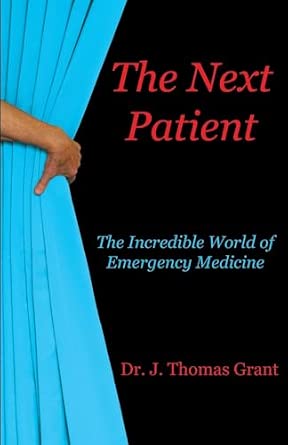
The Next Patient: The Incredible World of Emergency Medicine
Extraordinary encounters. Life-threatening diseases. Heroic actions. Instantaneous decisions. Unimaginable joy. Crushing heartache. Unexpected humor. Endless challenges. Personal threats. Unthinkable trauma. Dedicated providers. Overpowering love. In the emergency room, lives can be saved or lost. And people can be changed forever—including those dedicated to caring for their patients. Read more
About This Book
Extraordinary encounters. Life-threatening diseases. Heroic actions. Instantaneous decisions. Unimaginable joy. Crushing heartache. Unexpected humor. Endless challenges. Personal threats. Unthinkable trauma. Dedicated providers. Overpowering love. In the emergency room, lives can be saved or lost. And people can be changed forever—including those dedicated to caring for their patients. Read more
| ISBN-13 | 9798986160009 |
| Publisher | New Encounters Press |
| Publication Date | May 2023 |
| Edition | 1 |
| Pages | 363 |
| Language | English |
| Dimensions | 5.5 x 0.91 x 8.5 inches |
| Weight | 1.02 pounds |
Expert Analysis & Insights
In-depth editorial assessment across key dimensions
The narrative style is engaging and has been praised by many reviewers as a 'page-turner' that evokes strong emotions, which can enhance motivation and retention of the humanistic aspects of medicine. The case-based format encourages reflection on diagnostic reasoning and empathy.
Good for inspiring interest in emergency medicine among lay readers or pre-medical students, but not designed for knowledge reinforcement in a formal educational setting.
The table of contents lists chapter titles that hint at topics (e.g., 'GSW', 'Crisis in Room 3'), and there is a medical glossary that may help readers look up terms.
Not useful as a quick-lookup reference for clinical topics; readers can only find terms via the glossary, not specific conditions or procedures.
The book covers a wide range of cases across a 20+ year career, including trauma (GSW), cardiac emergencies, and pediatric cases, giving a broad narrative overview of emergency medicine. It touches on emotional and ethical challenges, adding a human dimension.
Adequate for a casual reader interested in ER life, but insufficient for anyone needing comprehensive medical knowledge.
The author explains some procedures and the rationale behind diagnostic tests in a way that is accessible to lay readers, as noted by RN reviewers who appreciated the clarity. The book may give readers a better understanding of ER workflows and why wait times occur.
Could be useful for patients or non-clinical staff to understand ER operations, but not for clinicians seeking procedural guidance.
The case stories illustrate real-world diagnostic challenges (e.g., meningitis, heart attack) and emphasize teamwork, thorough history-taking, and the importance of considering atypical presentations. A few reviewers noted the author's analytical process is described in detail, which may offer insight into bedside decision-making.
Not useful as a clinical reference for practicing physicians or residents; it may be of marginal interest to medical students observing ER dynamics but should not be used to guide patient care.
You May Also Like


