Key Takeaways

  • Wilderness medicine demands systematic patient assessment and evacuation planning; standard BLS texts do not replace field triage logic.
  • Austere antibiotic guides solve supply shortages but lack resistance data; carry them as backup, not primary therapeutics.

Choosing Field Medicine Books for Resource-Limited Environments

Wilderness and remote medicine books must survive mud, low light, and zero clinical support. Clinicians and expedition leaders need resources that prioritize rapid trauma stabilization, environmental decision-making, and clear evacuation pathways over hospital-centric protocols. This roundup evaluates five texts across standard BLS certification, visual layperson guides, austere antimicrobial substitution, and structured wilderness curricula. We focus on practical utility, guideline alignment, and how each book performs when traditional infrastructure disappears.

Advanced First Aid, Cpr, and AED

Best BLS Certification: Standardized AED and CPR Training

★ 3.8/5
Aaos

Who This Is For

College-level ECSI or AHA certification courses needing a structured, guideline-aligned student manual.

Why It Stands Out

Meets ILCOR and ECC standards with clear decision tables and step-by-step skills for rapid BLS acquisition.

Print quality defects and outdated mouth-to-mouth emphasis undermine field reliability and pandemic readiness.

Expert Angles

Curriculum Alignment

5.0/5

Designed for college courses with instructor materials, answer key, flexible delivery.

Optimal for ECSI/AHA-aligned first aid/CPR/AED certification courses in college settings.

Practical Application

4.0/5

Focuses on real-world lifesaving skills; includes decision tables, COVID-19 adaptations.

Ideal for lay responders and certification classes; useful for workplace first aid kits.

Alton's Antibiotics and Infectious Disease: The Layman's Guide to Available Antibacterials in Austere Settings

Best Austere Antimicrobial Guide: Veterinary Substitutes and Supply Lists

★ 3.2/5
Amy Alton ARNP, Joseph Alton MD

Who This Is For

Remote caregivers and expedition medics planning for grid-down scenarios where human pharmaceuticals are unavailable.

Why It Stands Out

Provides concrete dosing for accessible aquarium and avian antibiotics alongside practical sick-room and wound care protocols.

Relies on veterinary formulations and anecdotal dosing without current resistance data or formal citations, limiting clinical safety.

Expert Angles

Practical Application

3.0/5

Includes concrete supply lists, sick room construction, wound care recipes, and detailed dosing for accessible aquarium/avian antibiotics.

A pragmatic backup for preppers and remote caregivers; clinicians might adopt the supply checklists for austere mission kits.

Knowledge Depth

2.0/5

Covers a wide array of bacterial diseases and antibiotics relevant to off-grid settings, including rare epidemic threats.

Adequate for non-medical caretakers needing basic guidance; surgical trainees will find it lacking in deeper clinical nuance.

FIRST AID, CPR & AED: In Adult, Child, Infant

Best Visual Quick-Reference: Layperson CPR and Basic First Aid

★ 3.4/5
NORKOR OMABOE

Who This Is For

Community volunteers and workplace responders who need simple, picture-driven steps for immediate emergencies.

Why It Stands Out

Algorithm-style instructions paired with video access and photo sequences accelerate skill retention for untrained bystanders.

Grammatical errors and inconsistent editing reduce professional credibility and clinical precision.

Expert Angles

Learning Effectiveness

4.0/5

Uses simple language, picture sequences, and video access to facilitate rapid skill acquisition, appealing to visual and kinesthetic learners.

Best for beginners and those with limited medical background who need clear, step-by-step emergency instructions.

Practical Application

4.0/5

Hands-on, algorithm-style instructions with video demonstrations make it highly applicable for real-time emergency response by lay responders.

Ideal for first aid kits, community health workers, or anyone wanting a straightforward home emergency reference.

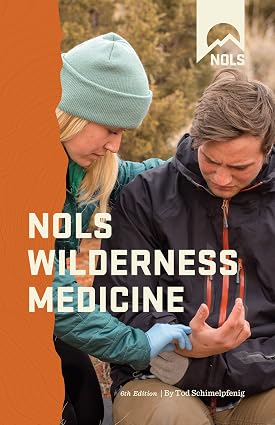
NOLS Wilderness Medicine

Best Wilderness Protocol Text: Updated NOLS Curriculum and Field Decision-Making

★ 4.3/5
Tod Schimelpfenig

Who This Is For

Outdoor educators and SAR personnel completing NOLS or WMI courses who need current environmental and trauma guidelines.

Why It Stands Out

Integrates decades of NOLS incident data into a compact, field-ready format with clear evacuation and stabilization pathways.

Omits advanced pharmaceutical dosing and detailed differential diagnoses required for prolonged field care beyond 48 hours.

Expert Angles

Curriculum Alignment

5.0/5

Directly aligned with the NOLS/WMI wilderness medicine curriculum and used as the official course text.

Ideal for NOLS students and instructors; less applicable for non-NOLS training paths.

Clinical Relevance

3.0/5

Covers core first-aid topics with practical field adjustments, grounded in decades of NOLS incident data.

Suitable for non-medical professionals; clinicians may find it too basic for advanced decision-making.

NOLS Wilderness Medicine (NOLS Library)

Best Budget Field Companion: Proven WFA Foundations and Kit Building

★ 3.9/5
Joan Safford, Tod Schimelpfenig

Who This Is For

Expedition leaders on a tight budget who need a durable, system-focused primer for standard wilderness first aid.

Why It Stands Out

Delivers a reliable Patient Assessment System and logical injury categorization that holds up on multi-day trips.

Lacks the latest guideline updates and relies on sketches instead of clinical photos, reducing visual diagnostic utility.

Expert Angles

Reference Quality

4.0/5

Well-organized by body system and injury type; highlighted emergency procedures for rapid access.

Valuable quick-lookup guide for outdoor enthusiasts, rangers, and wilderness trip leaders.

Pedagogical Value

3.0/5

Methodical Patient Assessment System, aligned with Wilderness Medical Society guidelines, clear and accessible for lay learners.

Ideal for WFA/WFR course attendees; not recommended as a sole self-study resource for mastery.

Wilderness Trauma Protocols vs. Austere Antibiotic Guidance

Field medicine demands different tools for immediate trauma stabilization versus prolonged infectious disease management.

NOLS Wilderness Medicine (7th Ed)
NOLS Wilderness Medicine
Tod Schimelpfenig

Systematic trauma and environmental emergencies focused on rapid assessment and evacuation logistics.

Alton's Antibiotics and Infectious Disease

Austere antimicrobial substitution and supply chain workarounds for grid-down infectious disease.

Comparison Point NOLS Wilderness Medicine Alton's Antibiotics and Infectious Disease: The Layman's Guide to Available Antibacterials in Austere Settings
Edition 7 1
Page Count 356 pages 322 pages
Primary Focus Trauma stabilization, environmental emergencies, and evacuation logistics Antibiotic substitution, wound recipes, and sick room setup
Evidence Base NOLS incident database and WMS practice guidelines Author field experience and veterinary formulary data
Field Utility Fast recognition and systematic patient assessment for evacuation Long-term antimicrobial dosing when pharmacies are inaccessible
Clinical Relevance
3.0/5
Covers core first-aid topics with practical field adjustments, grounded in decades of NOLS incident data.
Suitable for non-medical professionals; clinicians may find it too basic for advanced decision-making.
2.0/5
Provides empirical antibiotic regimens and symptom-based treatment paths for common and epidemic infectious diseases when no physician is available.
May serve as a last-resort field manual for remote or disaster scenarios, but not …
Practical Application
4.0/5
Concise, field-ready format with salient diagrams; emphasizes realistic interventions under austere conditions.
Excellent quick-reference for field teams and search-and-rescue volunteers.
3.0/5
Includes concrete supply lists, sick room construction, wound care recipes, and detailed dosing for accessible aquarium/avian antibiotics.
A pragmatic backup for preppers and remote caregivers; clinicians might adopt the supply checklists …
Pair a systematic trauma guide like NOLS with a dedicated antimicrobial reference if your mission exceeds 72 hours in the backcountry.

How We Evaluated These Resources

We scored each title against wilderness-specific criteria: speed of patient assessment, clarity under low-light or high-stress conditions, and alignment with current NOLS/WMS or AHA protocols. We weighted practical field utility over academic depth, penalized books that assumed hospital-level diagnostics, and flagged print durability and citation quality. Ratings reflect how well a book functions when evacuation is delayed and supplies are limited.

Building Your Resource Collection

Start with one structured wilderness trauma manual for systematic assessment and evacuation planning. Add a lean BLS reference only if your team lacks certified rescuers, and keep an austere antibiotic guide strictly as a last-resort backup when human pharmaceuticals are unavailable. Field bags are heavy; prioritize texts that solve immediate life threats over those that cover rare hospital scenarios.

Frequently Asked Questions

No. BLS texts assume rapid transport and defibrillator availability. Wilderness books cover prolonged field care, environmental physiology, and evacuation decision-making that standard manuals ignore.

Only as a strict last resort. Veterinary formulations differ in purity, dosing accuracy, and sterility. These books provide workarounds for supply failure, not substitutes for culture-guided therapy or licensed prescribing.

Buy the 7th edition if you need current WMS guideline updates and improved environmental protocols. The 6th edition works for budget kits but lacks recent evacuation standards and visual updates.

Use the NOLS 7th edition for standardized assessment and trauma triage. Pair it with a visual layperson CPR guide for volunteers who primarily need rapid hemorrhage control and basic airway management.

Final Verdict

Field medicine books must match the reality of delayed evacuation and limited supplies. Choose a structured wilderness trauma guide for decision-making, reserve austere antimicrobial texts for grid-down backups, and avoid hospital-centric manuals that waste space on unavailable diagnostics. Match the book to your actual mission timeline and supply chain.

Compare your top candidates by evacuation logic, print durability, and guideline currency before packing your field kit.