Choosing the Right Surgical Resource
Surgical training requires different tools for different moments. You need speed at the bedside, precision in the OR, and recall for exams.
Compare the best surgical references for trainees. Expert reviews on exam prep, bedside tools, and operative guides with clear trade-offs.
Surgical training requires different tools for different moments. You need speed at the bedside, precision in the OR, and recall for exams.
Students preparing for surgical finals or MRCS written exams.
Uses SAQs, EMQs, and MCQs to test a wide range of surgical subspecialties, promoting active recall.
User-friendly with short questions, multiple formats, and explanatory answers to reinforce learning.
Effective for active recall and exam simulation; combine with current texts.
Comprehensive alignment with undergraduate surgical finals and MRCS syllabi across multiple specialties.
Best used alongside updated resources to ensure curriculum currency.
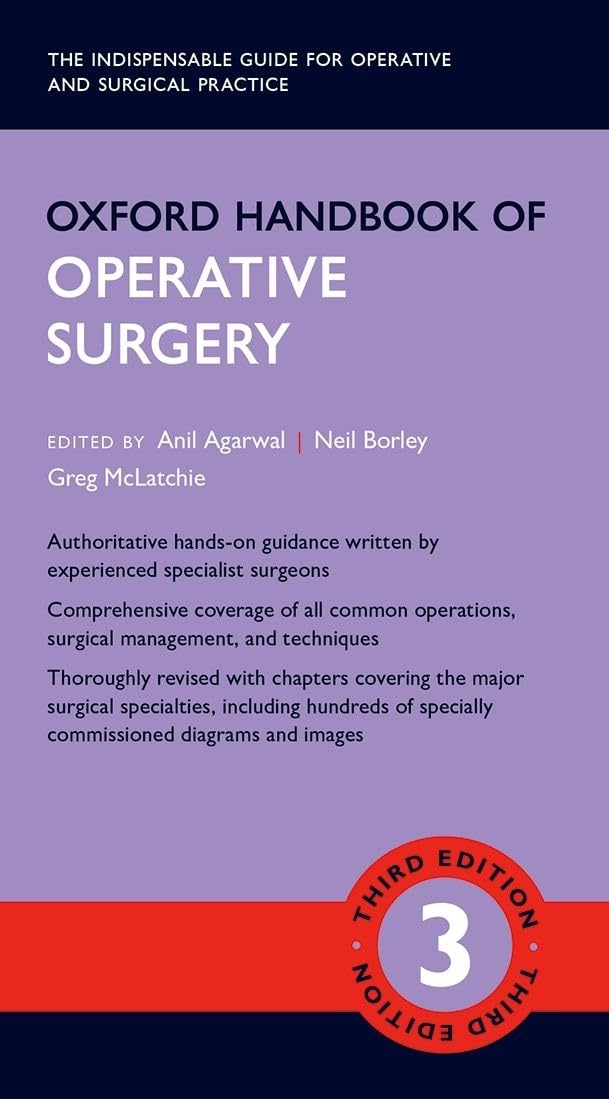
Surgical trainees who need step-by-step procedural guidance in the OR.
Pocket-sized with direct equipment lists and concise procedural steps for various operations.
Portable, pocket-sized format with 300+ diagrams; step-by-step equipment and technique guidance for the OR.
Perfect for scrubbed trainees who need immediate, actionable procedural steps.
Compact, quick-access handbook covering a wide variety of operations, ideal for last-minute review.
Valuable quick-reference for surgical residents and assistants in emergency or acute settings.
Interns and clerks needing fast access to protocols and drug doses on rounds.
High-yield algorithms and tabbed rapid-access tables facilitate immediate information retrieval during clinical rounds.
Includes perioperative management algorithms, critical care essentials, and medication dosing for immediate bedside decision-making.
Ideal for interns and new surgery residents requiring rapid on-service clinical guidance and protocol reminders.
Loose-leaf, pocket-sized format fits into a white coat, with digital access and audiobook conversion for on-the-go review.
Perfect for surgical trainees who need durable, instant-access pocket reference during rounds and call.
Surgical teams implementing ERAS pathways in GI or thoracic units.
Provides specific, evidence-based pathways for fasting and early mobility to standardize perioperative care and reduce complications.
Delivers procedure-specific ERAS pathways for digestive, cardiopulmonary, and pediatric surgeries grounded in expert consensus and outcomes data.
Ideal for surgeons and advanced practice providers implementing or refining ERAS protocols in GI and thoracic services.
Spans multiple subspecialties—esophageal, gastric, hepatic, cardiac, vascular, respiratory—in a single concise volume.
For a broad yet quick overview; readers seeking in-depth analysis should consult specialty-specific ERAS guidelines.
Pick the tool that fits your immediate clinical or academic need. While some books excel in curriculum alignment, others are superior as rapid-fire references.
Best for active recall and test simulation; lowest utility for bedside care.
Highest reference quality for ward management and quick dosing.
Best balance of curriculum alignment and intraoperative utility.
| Comparison Point | Cases for Surgical Finals | Pocket Surgery | Oxford Handbook of Operative Surgery |
|---|---|---|---|
| Edition | 1 | 3 | 3 |
| Page Count | 164 pages | 715 pages | 1022 pages |
| Primary Use | Studying for tests | Managing patients on wards | Performing operations |
| Key Format | Question and answer | Algorithms and tables | Step-by-step diagrams |
| Reference Depth | Low (Focused on recall) | High (Clinical utility) | Moderate (Procedural focus) |
| Curriculum Alignment | High (Exam focused) | Moderate (Generalist) | High (Operative focus) |
| Practical Application |
1.0/5
None; no operative or hands-on content.
Avoid for practical surgical training; only for written exam preparation.
|
5.0/5
Loose-leaf, pocket-sized format fits into a white coat, with digital access and audiobook conversion for on-the-go review.
Perfect for surgical trainees who need durable, instant-access pocket reference during rounds and call.
|
5.0/5
Portable, pocket-sized format with 300+ diagrams; step-by-step equipment and technique guidance for the OR.
Perfect for scrubbed trainees who need immediate, actionable procedural steps.
|
| Learning Effectiveness |
4.0/5
User-friendly with short questions, multiple formats, and explanatory answers to reinforce learning.
Effective for active recall and exam simulation; combine with current texts.
|
4.0/5
Full-color visuals, flowcharts, and bullet-point layout reinforce rapid recall and cater to visual and auditory learners via text-to-speech.
Excellent for quick memorization before exams and high-turnover clinical rotations.
|
4.0/5
Pre- and post-operative reading aid; tips and tricks from experienced surgeons accelerate skill acquisition.
Good for early-year trainees rotating through specialties who need rapid, case-specific learning.
|
We weighted resources based on:
* Portability for clinical use
* Alignment with surgical curricula
* Speed of information retrieval
Avoid buying multiple broad texts. Instead:
* Pair one fast bedside tool with one targeted question bank.
The ideal surgical toolkit is a tiered stack: we recommend 'Pocket Surgery' for immediate ward management, 'Oxford Handbook of Operative Surgery' for intraoperative preparation, and 'Cases for Surgical Finals' for structured academic review and exam success.